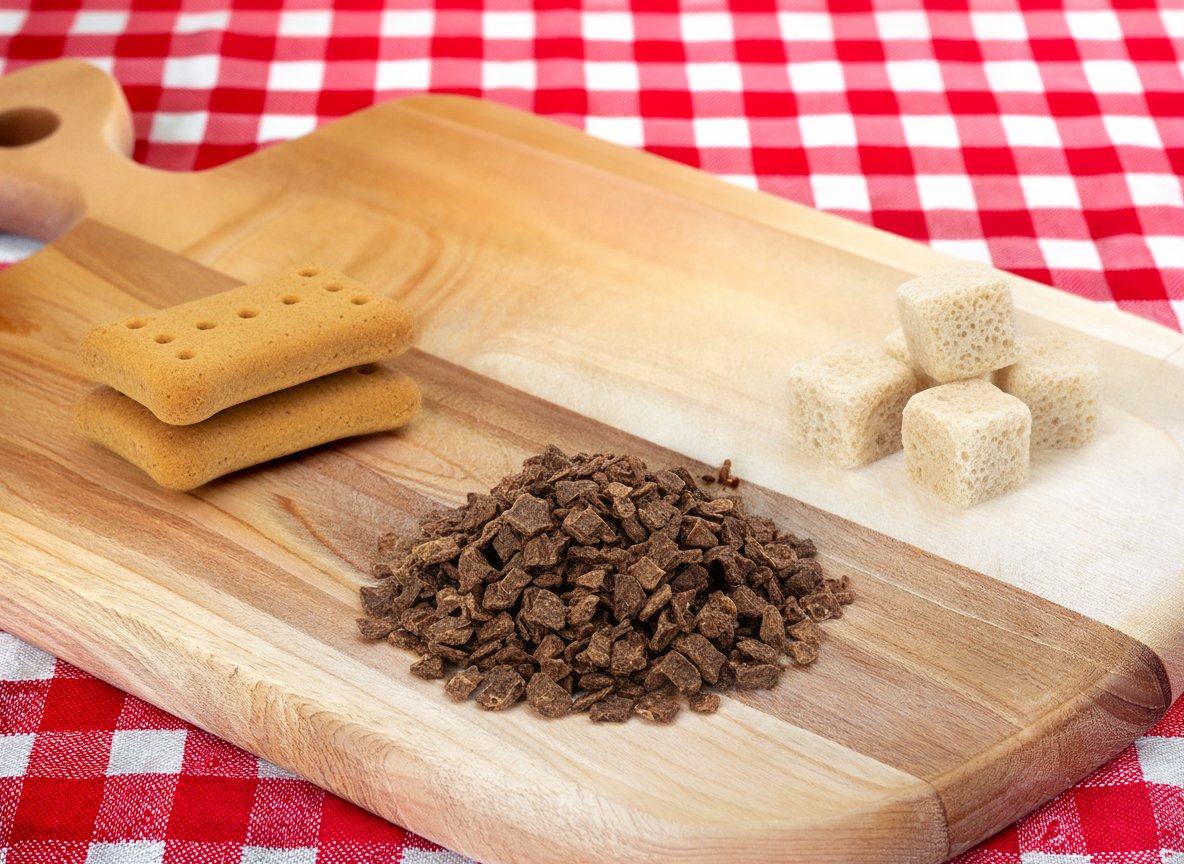
Dehydrated vs Freeze-Dried vs Baked: Which Treat Style Is Best For Training?
You’ve probably seen all three on store shelves: dense, chewy dehydrated treats; airy, crispy freeze-dried options; and firmer, baked varieties. But beyond appearance, how do they actually stack up for training, palatability, and value?
If you’ve ever wondered which format your dog will respond to fastest—or which won’t break your training budget—this is the breakdown you need!
Understanding The Three Main Treat Formats
Dehydrated Treats
Dehydrated treats are made by removing moisture at low temperatures over time, preserving the protein’s natural structure and nutrients. The result is a dense, chewy texture that lasts longer in your dog’s mouth [Source: Pet food processing standards, AAFCO guidelines].
Pros:
Longer shelf life (typically 24+ months in sealed packaging)
Texture keeps dogs engaged longer
High protein concentration per gram
No powder bombs like freeze-dried treats
Cost-effective per treat
Heat kills food-born bacteria
Smidgie Snacks & Snackola are also sized right for all your training needs.
Cons:
Requires a little more chewing time (but the dogs think it’s worth it)
May not work as well for dogs with dental issues
Best for: High-value single ingredient rewards, extended chewing sessions, training when you have a bit more time per reward cycle.
Freeze-Dried Treats
Freeze-dried treats are made by freezing the protein and then removing moisture through sublimation—a process that preserves the protein’s structure while creating an extremely light, airy texture. They rehydrate quickly if your dog drinks water after eating them.
Pros:
Extremely lightweight (more pieces per bag by weight)
Dissolve quickly (good for rapid-fire training)
Long shelf life if kept in dry conditions
Intense flavor concentration
Nearly 100% protein with minimal fillers
Cons:
Proportionately higher cost per kilo/pound
More fragile and crumbly, often turning into powder in your pocket or pouch
Packaging must protect from humidity
Can be messy if they break during training
Freeze-drying doesn’t kill food born bacteria
Best for: High-intensity training sessions, clicker training with rapid rewards, dogs who need quick reinforcement.
Baked Treats
Baked treats are cooked in an oven until firm, creating a crunchy texture. They’re closer to a biscuit in format and are often made with mixed ingredients (proteins, grains, binders).
Pros:
Familiar format (many owners recognize “dog biscuits”)
Crunch can support dental health
Typically the most affordable option
Easy to portion and store
Cons:
Often contain fillers, binders, or added ingredients
Often contain unwanted preservatives
Lower protein concentration per gram
Less engaging than chewy or airy options
May not satisfy high-drive dogs during serious training
Best for: Everyday snacks, supplementary treats between training sessions, casual snacking, and not for serious training rewards.
Which Format Wins For Training?
The answer depends on your training style:
For building drive or working with high-value rewards: Dehydrated beats the others. The chewy texture and longer engagement time create stronger positive association—especially for recall training or difficult behaviors.
For clicker training or rapid-fire reinforcement: Freeze-dried wins in flavour but not in trainer convenience when the treats turn to powder in your pouch. You need tiny pieces, quick consumption, and instant reward delivery.
For budget-conscious, everyday use: Baked treats make sense—but if you’re serious about training, they’re usually underwhelming. Dogs lose interest fast, and the lower protein means less nutritional reward.
The Pre-Diced Advantage of Smidgin & Company treats
Smidgin’s approach matters: all our Essentials and International treats come pre-diced into training-sized pieces, ready-to-go straight out of the bag. This gives you the benefits of dehydrated (high-value, engagement, drive-building) without the mess or any prep time. No breaking apart larger chews, no cutting up large slabs, no powder in your training pouch, no guessing whether the piece is the right size. We’ve already done all the guess work for you and the prep, and left you free to build that bond with your dog!
Storage and Shelf Life: A Quick Comparison
Format
Shelf Life
Storage Requirement
Cost per Gram
Dehydrated
18-24 months
Cool, dry place
$
Freeze-Dried
12-18 months
Sealed, dry, low humidity
$$$
Baked
12-18 months
Cool, dry place
$
Combining Formats For A Smart Training Toolkit
You don’t have to choose just one. Many successful trainers use a rotation:
Freeze-dried for clicker sessions: Fast, precise reinforcement.
Dehydrated for building drive: High-value rewards for difficult behaviors or recall.
Baked for everyday breaks: Low-training moments, casual snacking between sessions.
This “mixed toolkit” approach keeps your dog engaged and prevents treat boredom—a real factor in maintaining training motivation. Your dogs may have something to say about it though, since most dogs love Smidgie Snacks and Smidgie Snackolas so much that they request them exclusively!
The Bottom Line
For serious training, dehydrated treats are the gold standard—if they’re pre-diced for convenience, like our are. Freeze-dried works decently for rapid reinforcement as well. Baked treats are fine for everyday use but won’t cut it for real serious training work.
The best choice depends on your goals. But if you’re investing time in training your dog, invest in treats that match your training ambition. We’ve got you covered.